
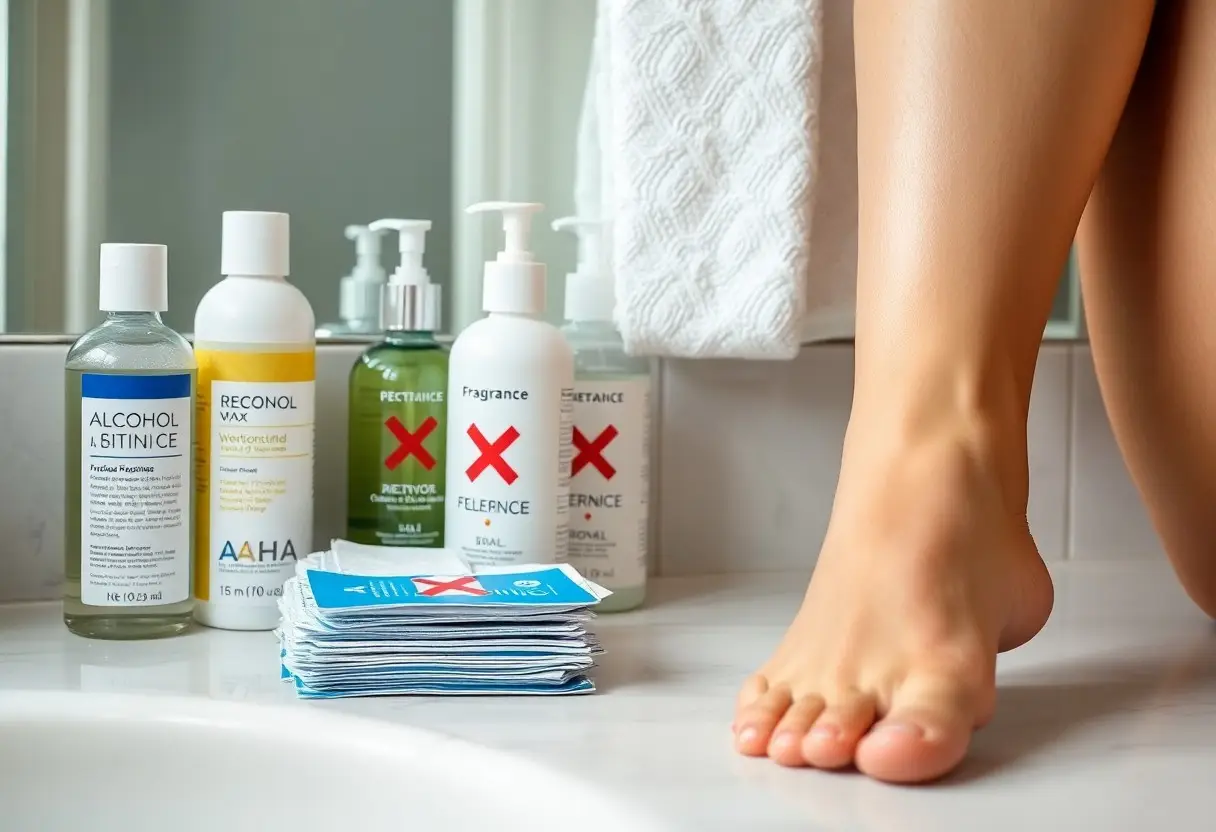
Just removed unwanted hair with waxing? Your skin is now more sensitive and prone to irritation. Avoid alcohol, fragrance, and necessary oils-they can cause redness and burning. Steer clear of retinoids and AHAs/BHAs, as they increase sensitivity. Stick to soothing ingredients like aloe vera and chamomile to calm and protect your skin.
The Alcohol Offense
Alcohol in skincare products can severely irritate freshly waxed skin, stripping natural moisture and weakening the protective barrier. You’re left more vulnerable to stinging sensations and potential infection. Avoid toners, astringents, or serums containing alcohol for at least 24 hours post-waxing to prevent unnecessary discomfort.
Spirituous Droughts
Products with high alcohol content dry out your skin rapidly after waxing. This dehydration slows healing and increases sensitivity. Isopropyl alcohol and ethanol are common culprits-check labels carefully to protect your skin‘s recovery.
The Sting of Vanity
Perfumes and synthetic fragrances may seem luxurious, but they’re a hidden threat after waxing. These additives often cause redness, itching, or even chemical burns on exposed follicles. Skipping scented lotions and mists helps prevent painful reactions.
Perfumed products promise indulgence but deliver irritation when your skin is most defenseless. Even natural necessary oils can provoke inflammation because they’re highly concentrated. You’re better off choosing unscented, hypoallergenic formulas that support calm, healthy healing without risking a flare-up.
Perfumed Perils
Skin becomes highly sensitive after waxing, and fragranced products can trigger irritation or allergic reactions. You expose delicate pores to unnecessary risk when using scented lotions or sprays post-treatment. Avoid anything with synthetic fragrance to prevent inflammation and discomfort during the healing phase.
Scent combust
Scented slander hides in everyday products like body sprays and perfumed wipes. These often contain alcohol and artificial fragrances that burn freshly waxed skin and disrupt its natural recovery. You’re better off choosing unscented, hypoallergenic options for at least 24 hours.
Fragrant Folly
Fragrant folly leads many to reach for their favorite floral lotion right after waxing-only to regret it. This simple mistake can cause redness, itching, or even breakouts. Your skin needs gentle, non-irritating care, not perfumed indulgences, in the hours following hair removal.
Choosing a fragranced product after waxing might seem harmless, but the chemicals behind those pleasant scents-like phthalates and synthetic musks-can penetrate compromised skin barriers. These substances don’t just cause surface irritation; they may trigger long-term sensitivity or disrupt skin balance. Opting for fragrance-free, dermatologist-tested moisturizers supports healing without hidden risks. Your post-wax routine should prioritize protection, not perfume.
The Acidic Affront
You expose delicate skin after waxing, and harsh acids can turn recovery into irritation. Avoid applying any acidic products immediately post-wax, as they amplify sensitivity and may cause redness or burns on open follicles. Your skin needs calm, not chemistry-it’s better to wait at least 48 hours before reintroducing such ingredients.
Earnest Retinoids
Retinoids speed cell turnover, but that’s exactly why they’re risky after waxing. Using them too soon can lead to peeling, redness, and increased inflammation. Your freshly waxed skin is already stressed-adding retinoids overwhelms it. Wait a minimum of two days to let your skin barrier stabilize before considering their return.
Biting Glycolics
Glycolic acid exfoliates by breaking down surface cells, but post-wax skin doesn’t need more breakdown. Applying glycolics too soon can cause stinging, rash, or even chemical burns. These alpha hydroxy acids are potent-delay use for 2-3 days to prevent compromising your skin‘s recovery.
Glycolic acid penetrates deeply due to its small molecular size, making it effective but potentially aggressive on compromised skin. After waxing, your follicles are open and your protective barrier is weakened. Introducing glycolics during this time disrupts healing and increases the risk of hyperpigmentation and long-term sensitivity. Let your skin regain equilibrium before resuming any exfoliating regimen.
Granular Greed
You expose raw skin to harsh treatment when you reach for gritty scrubs post-wax. Exfoliating with coarse particles can tear delicate tissue, inviting irritation and infection. Your pores are open and vulnerable-treat them with care, not abrasion.
Abrasive Ambition
You might think daily scrubbing prevents ingrown hairs, but over-exfoliating backfires. Physical scrubs with rough beads or shells worsen inflammation and compromise your skin barrier. Skip the aggression-gentle is more effective.
The Friction Fiasco
You risk micro-tears when using rough washcloths or loofahs on freshly waxed skin. Friction delays healing and increases sensitivity, making redness worse. Soft hands and lukewarm water are your safest tools.
Friction isn’t just uncomfortable-it actively damages your skin’s recovery process. Rubbing with towels or textured materials can dislodge healing cells, leading to hyperpigmentation or scarring, especially in darker skin tones. Always pat dry, never scrub.
Heavy Oils and Clogged Pores
After waxing, your skin is more vulnerable to irritation and breakouts. Heavy oils sit on the surface and trap bacteria in open follicles, increasing the risk of clogged pores and inflammation. You’re better off skipping rich coconut or olive oil-based products during the healing phase to prevent unwanted bumps and infections.
Mineral Mischief
Mineral oil creates a barrier that locks in moisture but also traps heat and debris. This synthetic ingredient doesn’t nourish skin-it just seals it off. You may unknowingly encourage folliculitis by using products with this occlusive agent right after waxing.
Suffocated Surfaces
Thick creams and occlusives can block your pores just when they’re most exposed. After waxing, your follicles are open and sensitive. You risk trapping dirt and oil underneath, leading to redness, swelling, or even infection if the skin can’t breathe properly.
Your freshly waxed skin needs space to recover, not suffocation under heavy lotions. When you apply thick, pore-clogging formulas, you disrupt the skin’s natural ability to regulate oils and shed dead cells. This blockage can lead to painful ingrown hairs and bacterial flare-ups, especially in areas like the bikini line or underarms where airflow is already limited. Opt for lightweight, non-comedogenic alternatives instead.
Final Words
Hence, avoid alcohol-based products, fragranced lotions, exfoliants, and oil-heavy creams right after waxing. Your skin remains sensitive and exposed, making it prone to irritation or infection. Stick to gentle, fragrance-free moisturizers and keep the area clean. You protect your skin’s recovery by choosing ingredients wisely in the 24 to 48 hours post-wax.
FAQ
Q: What skincare ingredients should I avoid right after waxing?
A: After waxing, your skin is more sensitive and prone to irritation. You should avoid using products with alcohol, fragrance, retinoids (like retinol or tretinoin), alpha-hydroxy acids (AHAs) such as glycolic or lactic acid, and beta-hydroxy acids (BHAs) like salicylic acid. These ingredients can cause stinging, redness, or even chemical burns on freshly waxed skin. Wait at least 24 to 48 hours before reintroducing them into your routine.
Q: Can I use scented lotions or perfumes on waxed areas?
A: No, you should not apply scented lotions, perfumes, or heavily fragranced body products immediately after waxing. Fragrances are common irritants and can trigger itching, redness, or allergic reactions on open hair follicles. Stick to fragrance-free, gentle moisturizers like aloe vera gel or unscented lotions for the first day after your waxing session.
Q: Is it safe to use acne treatments after waxing?
A: Acne treatments often contain active ingredients like benzoyl peroxide, salicylic acid, or retinoids, all of which can be too harsh on freshly waxed skin. Applying these too soon can lead to dryness, peeling, or increased sensitivity. It’s best to pause acne treatments for at least 24 hours post-waxing. If you must treat breakouts, wait until any redness or irritation has completely subsided.