
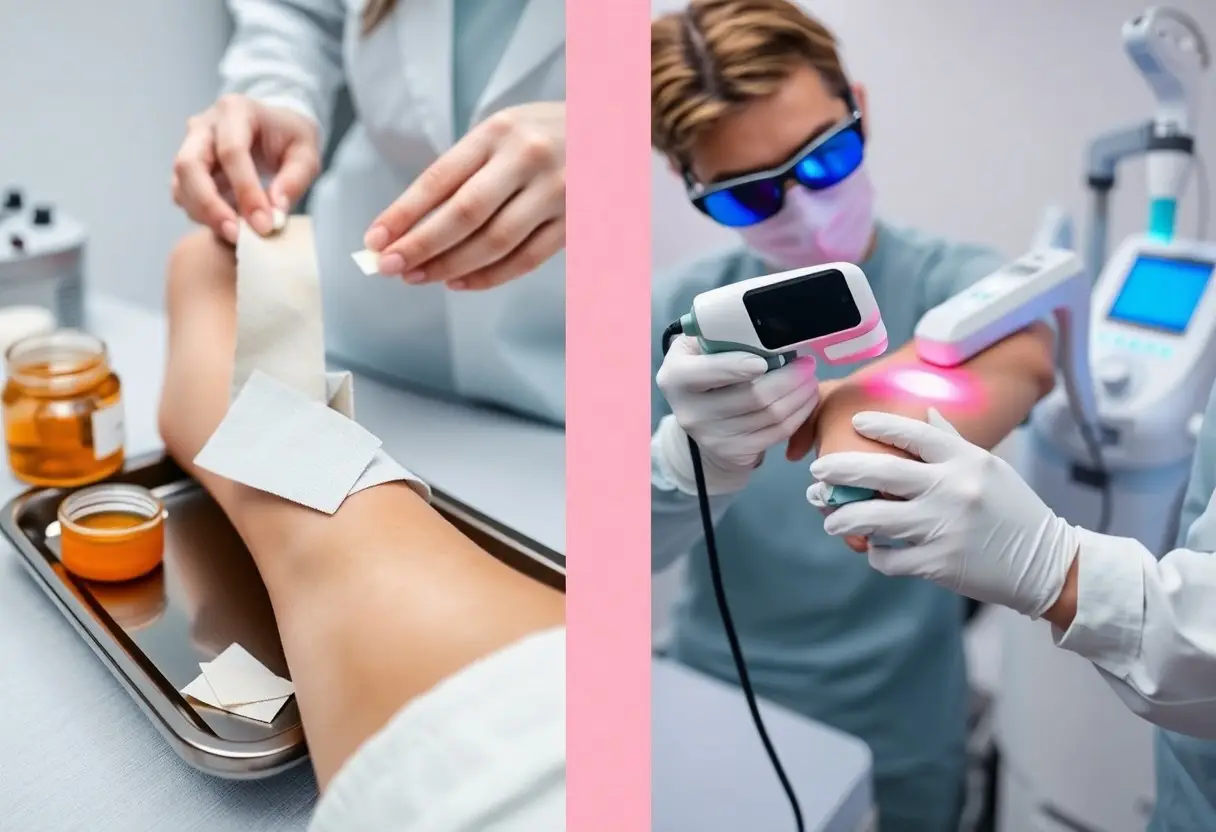
Over time, you’ve likely weighed the pros and cons of temporary versus long-term hair removal. Waxing offers immediate results but requires frequent upkeep and can cause ingrown hairs. Laser treatment provides lasting reduction, though it demands multiple sessions and higher upfront cost. Your skin tone and hair type directly impact laser effectiveness and safety.
Key Takeaways:
- Waxing removes hair from the root and provides smooth skin for 3 to 6 weeks, but requires regular maintenance as hair grows back.
- Laser hair removal targets hair follicles with light energy to reduce hair growth over time, offering long-term results after multiple sessions.
- Waxing works on all skin and hair types, while laser is most effective for people with light skin and dark hair, and may not work well for gray, white, or very light hair.
The Ritual of the Hot Wax
Heat melts the wax to just the right consistency, clinging to each hair without burning your skin. You lie still, knowing what comes next. The esthetician spreads it swiftly, presses a cloth strip down, and in one motion, pulls-removing hair from the root. It’s quick, sharp, and over in seconds. The results are smooth, immediate, and unmistakable.
The Sharp Sting of the Strip
Pain flashes the moment the strip lifts away. It’s a sudden, sharp sensation-over in a blink but impossible to ignore. Your body tenses instinctively, bracing for the next pull. Some areas feel more sensitive than others, especially the bikini line or upper lip. Breathing through it helps, but no one pretends it’s painless.
The Briefness of the Smooth Skin
Smoothness lasts only 3 to 6 weeks. Hair returns gradually, starting as soft fuzz before regaining full thickness. Regrowth is inevitable, and with it, the need to repeat the process. You’ll schedule your next session before the stubble becomes noticeable, staying ahead of the cycle.
While waxing delivers immediate results, its effects are temporary by nature. Hair grows back because wax doesn’t destroy the follicle-only delays regrowth. Over time, frequent waxing may thin hair slightly, but you’ll never achieve permanent reduction. This cycle of repetition defines the waxing experience: effective, but never final.
The Modern Power of the Laser
You experience a shift in hair removal standards when laser technology enters your routine. Unlike waxing, which pulls hair from the surface, lasers target the root with precision. This focused energy disables follicles over time, offering longer-lasting results with each session. The modern laser isn’t just fast-it’s built for safety, adaptability, and real effectiveness across skin and hair types.
The Steady Aim of the Light
Light locks onto pigment in your hair, traveling down to the follicle with exact focus. Each pulse is calibrated to minimize damage to surrounding skin, making the process both efficient and safe. You feel a brief sensation-like a snap of a rubber band-but it passes instantly. Consistency in wavelength ensures deeper impact without guesswork.
The Final Death of the Hair
Your follicle absorbs the laser’s energy, which transforms into heat and destroys the growth center. Once damaged, the hair cannot regenerate, leading to permanent reduction after a full cycle. You’ll notice fewer strands returning, and those that do are often finer and lighter. This isn’t temporary removal-it’s lasting change.
Damage to the follicle must be sufficient and repeated to achieve permanence. Lasers work best during active growth phases, which is why multiple sessions are necessary. You’re not just removing hair-you’re interrupting its life cycle. With proper timing and settings tailored to your skin tone and hair color, the laser ensures that regrowth diminishes significantly, often disappearing entirely in treated areas.
The Financial Weight
Cost plays a defining role in your hair removal decision. While waxing feels lighter on the wallet month to month, its recurring nature adds up silently over time. Laser treatment demands more upfront, but the potential for lasting results could mean fewer expenses in the long run. You’re not just paying for removal-you’re investing in time, comfort, and confidence.
Small Sums Paid Often
Waxing requires your return every few weeks, each session chipping away at your budget with modest but frequent charges. These routine expenses accumulate faster than most expect, turning what seems affordable into a long-term financial drain. You’re not just buying smooth skin-you’re paying for repetition.
The High Price of Permanence
Laser treatment carries a steeper initial cost, with most people needing 6-8 sessions for optimal results. Though expensive at first, many achieve permanent hair reduction, drastically cutting future spending. You’re not overspending-you’re prepaying for freedom from constant upkeep.
Each laser session targets hair follicles at their root, requiring precision and advanced technology, which explains the higher per-visit price. Clinics use medical-grade devices operated by trained professionals, ensuring safer, more effective outcomes. While the total cost may reach hundreds or even thousands, your long-term savings-and time regained-often justify the investment. You’re not just removing hair; you’re reshaping your routine.
The Endurance of the Flesh
Your skin withstands more than you realize during hair removal. Waxing pulls hair from the root, causing immediate stress to follicles and surrounding tissue. Laser targets pigment, generating heat that can shock the dermis. Repeated exposure without proper care risks long-term sensitivity or pigmentation shifts. How well your body adapts depends on technique, frequency, and your skin’s natural resilience.
The Irritation of the Pore
Irritation often flares right after waxing, when open pores invite inflammation. You may see red bumps or feel tenderness, especially on delicate areas like the bikini line or face. Laser can also trigger follicular swelling, though it’s usually milder. Your reaction depends on skin type, with fair, sensitive complexions at higher risk for adverse responses.
The Recovery of the Skin
Healing begins the moment treatment ends. Your skin works to restore its protective barrier, calming inflammation and closing follicles. Proper aftercare-like avoiding sun and using soothing lotions-speeds recovery. Most redness fades within hours, but deeper treatments may need days. You must resist picking or scratching to prevent infection and scarring during this phase.
After laser sessions, your skin enters a regenerative cycle that lasts up to a week. The treated follicles shed gradually, and underlying layers rebuild with minimal disruption-if you avoid heat, sweat, and harsh products. Unlike waxing, which causes surface trauma each time, laser offers cumulative healing with fewer repeated injuries. You’ll notice less reactivity over time, provided you follow post-treatment protocols precisely. This progressive calm is one of laser’s most distinct advantages for long-term skin health.
Summing up
Taking this into account, you choose waxing for temporary results and lower upfront cost, while laser offers long-term reduction with precision and less regrowth. Your skin type, hair color, pain tolerance, and budget determine the better fit. Both methods have proven effectiveness, but laser typically provides more lasting outcomes with consistent sessions.